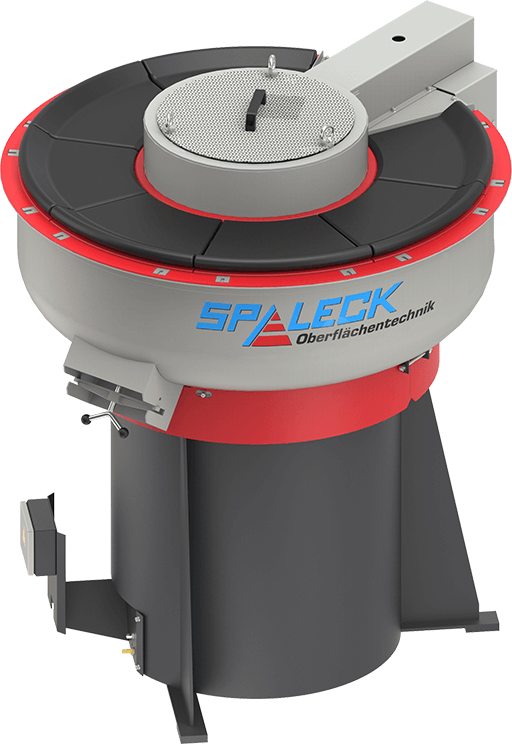
Roundtub Vibrators
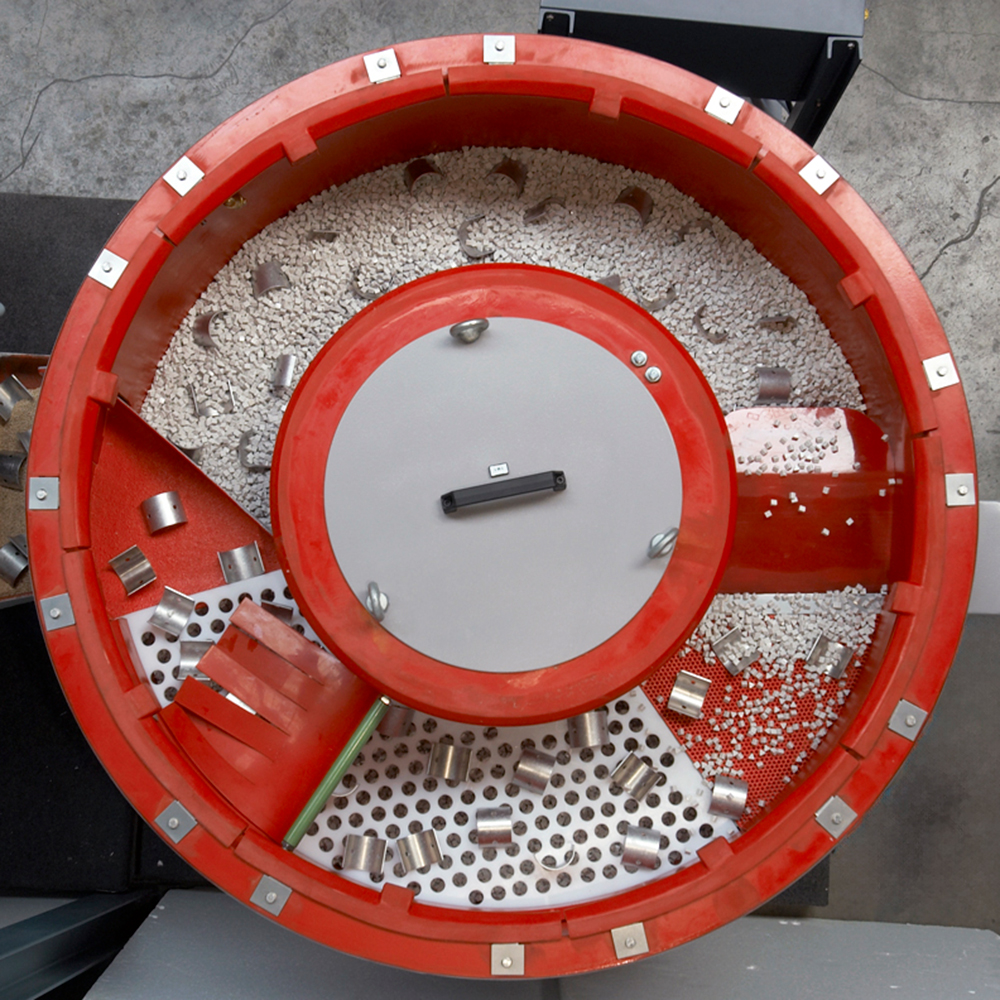
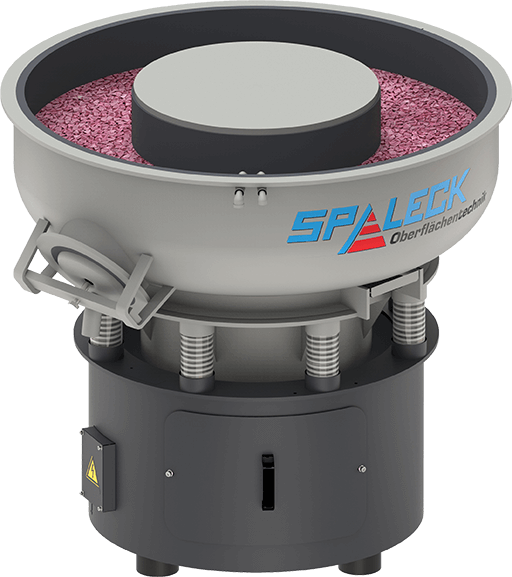
Circular trough vibrators are among the most widely used systems in the field of vibratory finishing. They are characterized by their circular tank geometry and a particularly reliable operating process. The range of applications is extremely diverse: it extends from efficient deburring and edge rounding to high-gloss polishing of a wide variety of materials. Their compact design and integrated separation units also make them particularly user-friendly and cost-effective to operate, even with complex workpiece geometries.
How Circular Trough Vibrators Work
In our circular trough vibrators, a circular processing chamber ensures optimal results. The systems are powered by high-performance unbalanced motors that set the grinding media and workpieces in continuous, circulating motion. This precisely controlled relative motion enables uniform surface finishing across the entire batch: efficient, reproducible, and reliable.
Fields of application
Roundtub vibrators SV
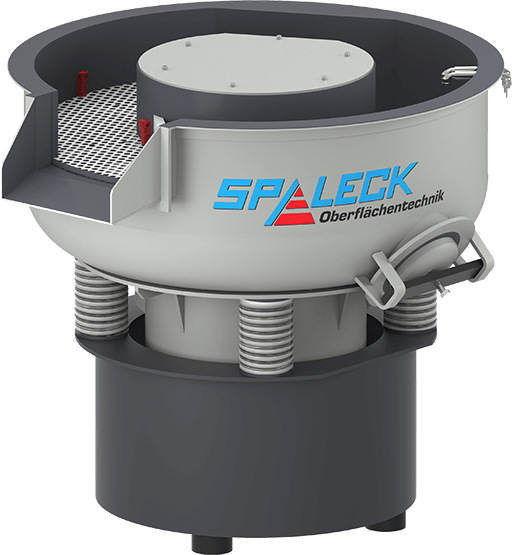
The vibratory systems in the SV series have an integrated separating section with a manual separating flap. This makes them suitable for both small, delicate workpieces and large, bulky parts. In conjunction with a frequency inverter, the SV series is also ideal for paste polishing – a versatile system for different requirements and materials.
Roundtub vibrators SVF
Our SVF series offers a bottom discharge for connection to an external separating unit. This concept is ideal for workpieces that cannot be separated efficiently via flaps or sieves. The bottom emptying mechanism enables reliable separation of the workpiece/abrasive mixture – especially for complex or sensitive components.
Roundtub vibrators VA
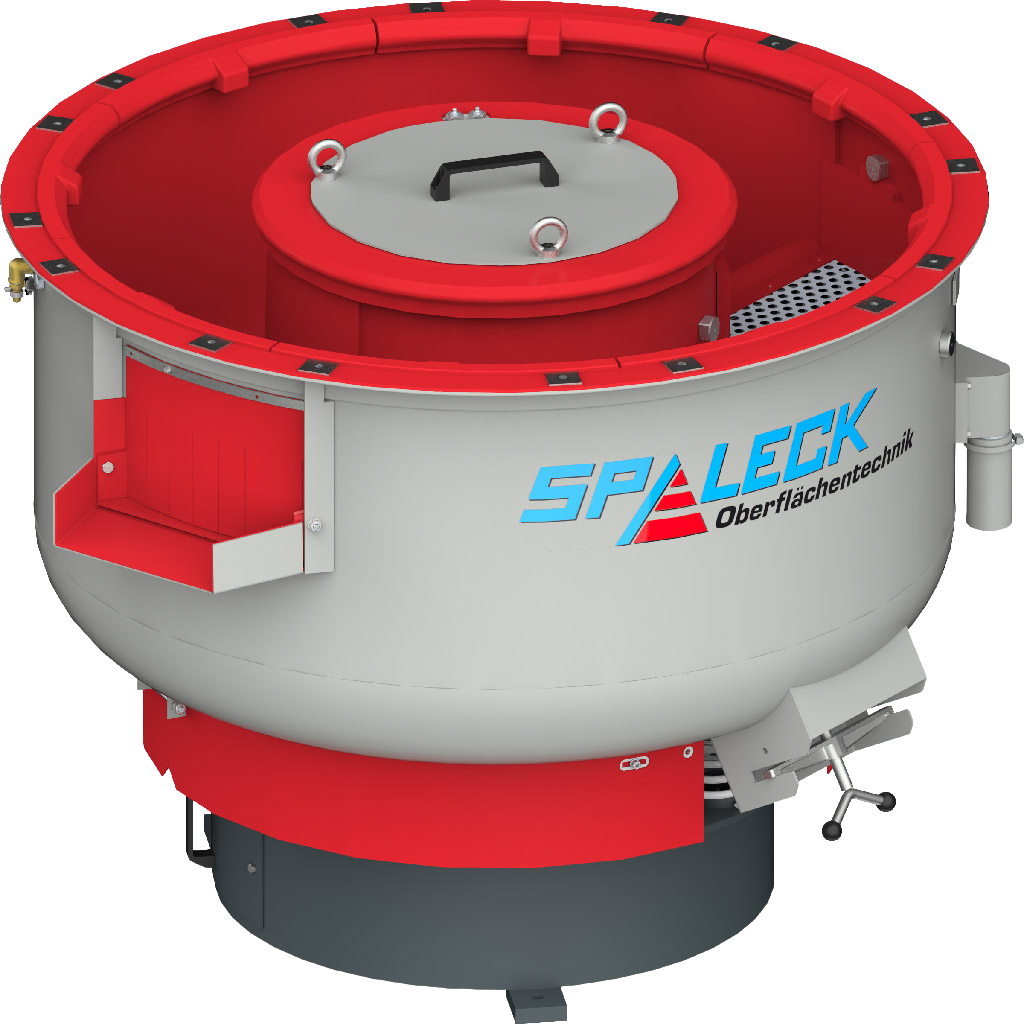
The VA series is our modular all-round system for round trough vibration. It is supplied with a pneumatically controlled separating flap as standard and can be extended with numerous options – including undersize screening for the automatic removal of undersized abrasive particles and splinters. This significantly reduces the risk of jamming and increases process reliability – especially with sensitive workpieces.
Roundtub vibrators VAF/B
The VAF/B series is specially designed for automated multi-batch operation. Thanks to a pneumatic bottom discharge flap, the entire workpiece/grinding wheel mixture is completely emptied after processing. In combination with an external separating unit, a fully automatic system is created – ideal for continuous operation with high quantities and consistent quality.
Technical highlights at a glance
- High cost-effectiveness for large quantities
- Gentle and consistent machining of all workpieces
- Versatile for deburring, smoothing, polishing, and cleaning
- Suitable for many materials: steel, aluminum, stainless steel, brass, plastics, and many more.
- Can be integrated into automated processes
Supplementary components
Process media
Drying systems
Process water treatment
Inspection technology
Process automation
Customer support
Downloads
Your contacts for circular trough vibrators


Frequently Asked Questions About Our Circular Vibrators
What workpiece sizes can be processed in circular vibrators?
The maximum dimensions of workpieces to be processed are primarily determined by the system size and, more specifically, by the width of the processing channel in circular trough vibrators. To ensure uniform and effective surface finishing, the component must be able to move and rotate freely within the abrasive media mass without jamming. For this reason, it is essential to always consider the dimensions of the workpieces in relation to the respective channel geometry and the selected abrasive media size. We would be happy to support you with individual consultation to help you choose the right system for your components.
Which materials can be processed with circular vibratory bowls?
In principle, almost all materials can be processed in our circular vibratory bowls. It makes no difference whether they are metals, plastics, or ceramics. However, a decisive factor for successful processing is a certain rigidity of the material. With very elastic materials, there is a possibility that the required relative movement between the workpiece and the abrasive media may not occur to the necessary extent. We will be happy to examine on a case-by-case basis whether your specific material is suitable for processing in circular vibratory bowls.