













Centrifugal systems
In centrifugal systems (also disc centrifuges), high rotational speeds generate extreme grinding forces that enable significantly more intensive processing than in conventional vibratory systems. This makes them ideal for particularly thorough deburring or polishing processes. Workpieces must meet certain requirements in terms of size, weight and stability in order to be processed safely and effectively.
How centrifugal systems work
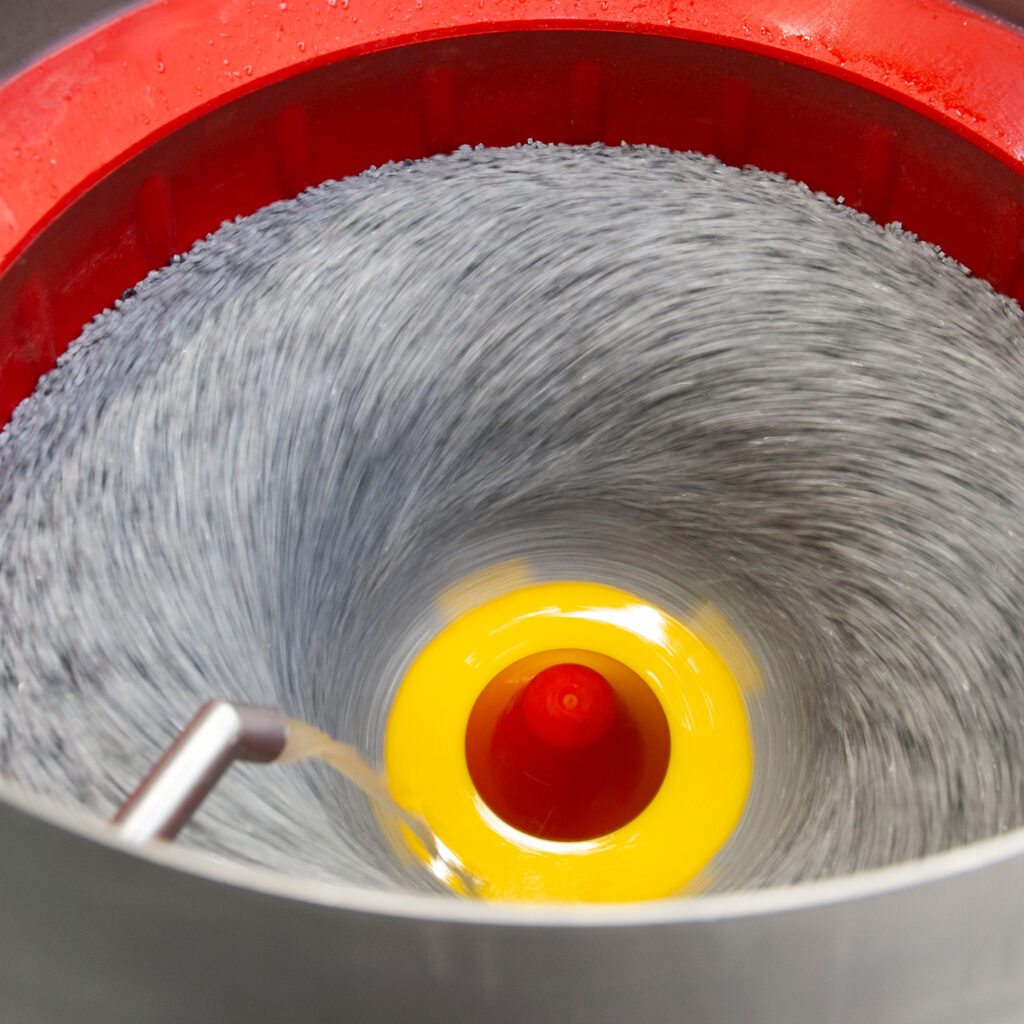
The work bowl of a centrifugal system consists of a stationary outer bowl and an internal rotating disk. This sets the mixture of abrasive media and workpieces in a dynamic circular motion. The mass is pressed against the container wall by the centrifugal force and falls back cyclically due to gravity – an intensive machining process that is repeated continuously. This design is often referred to as a disc centrifuge, as the rotating disc generates the process movement.
Fields of application
Our systems
Centrifugal systems Z1/Z2
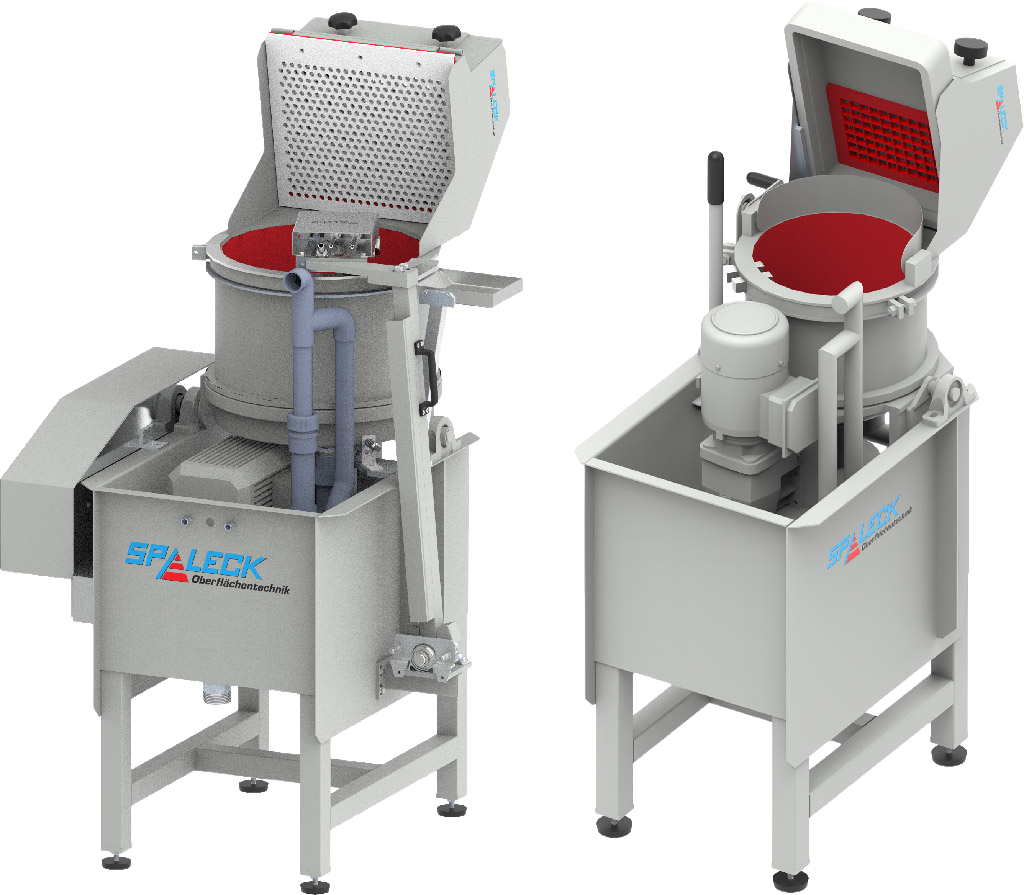
The Z1 and Z2 centrifugal systems are our compact entry-level machines for smaller batches and manual separation. With a container volume of 11 and 30 liters respectively, they are ideal for small to medium quantities. Their flexibility and ease of operation are particularly impressive for frequently changing workpieces or test runs.
Centrifugal system Z4
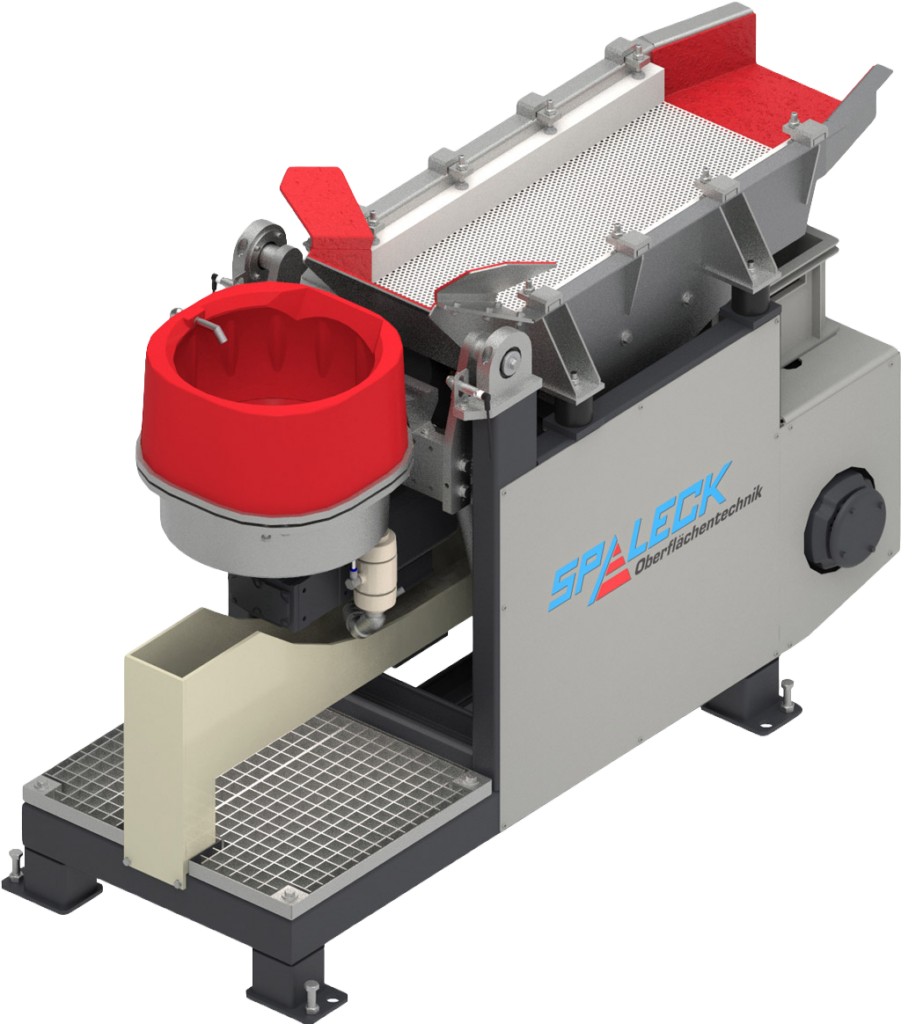
Our Z4 combines the compact design of a stand-alone machine with an automated separation unit for greater user-friendliness. With a working container volume of 30 liters, it is particularly suitable for medium-sized series and frequent use in continuous operation. The automated separation saves time and makes the work process considerably easier.
Centrifugal systems Z11/Z22/Z33/Z44
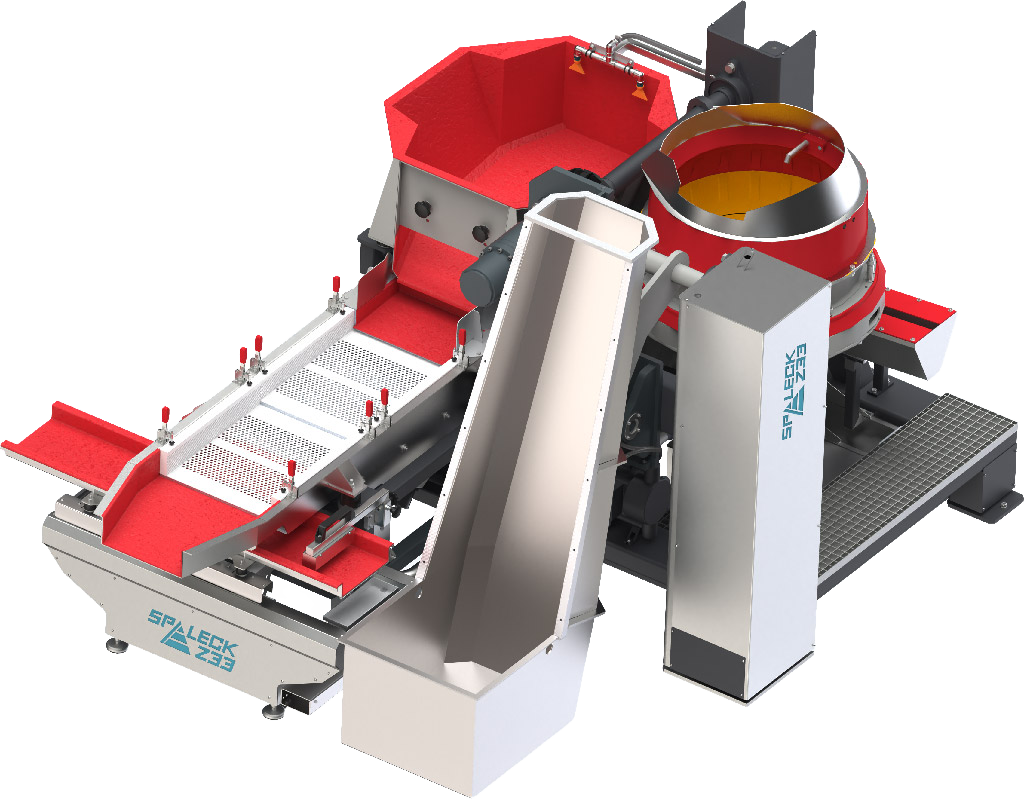
Our powerful centrifugal systems from the Z11-Z44 series enable the simultaneous processing and separation of two workpiece batches. In the tandem version, the next batch can be processed in parallel to the separation process – significantly increasing efficiency. The systems are ideal for users with high throughput and increasing automation requirements.
Technical highlights at a glance
- Up to 15 times more efficient processing than in vibration systems
- Automatic adjustment and control of the annular gap
- Concentricity of the rotary table of +/- 0.025 mm
- Special working container geometry for intensive processing and shortest process times
- Complete emptying thanks to 180-degree swiveling working container
- Processing in two-batch operation
- Can be expanded to a tandem system
Supplementary components
Process media
Drying systems
Process water treatment
Inspection technology
Process automation
Customer support
Your contacts for centrifugal systems


Frequently asked questions about our centrifugal systems
What is a centrifugal force system?
A disc centrifugal machine is a vibratory finishing machine in which the workpieces are processed together with the abrasive media in a container, and a rotating disc in the base generates the process movement. This disc sets the mass in a controlled, intensive circular motion, ensuring very uniform processing with high removal rates, even with demanding surfaces and geometries.
Difference to vibration systems: While vibration systems mainly generate movement through oscillations, the disc centrifugal system works with a rotating, ‘pulling’ movement through the rotating disc. This often makes the machining processes faster, more intensive and more precisely controllable – especially when it comes to defined edge rounding, deburring or surface finishing in a short time.
What distinguishes centrifugal machines from conventional vibration machines?
The key difference between the two processing methods lies in the type of movement and the associated intensity. The centrifugal force applied in a centrifugal disc finishing machine generates up to 15 times greater grinding forces than in a vibratory finishing machine, thus requiring shorter processing times.
For which workpieces is centrifugal surface finishing particularly suitable?
Centrifugal surface finishing is particularly suitable for small and compact workpieces that offer a certain degree of stability. Delicate structures are not particularly suitable for this type of processing, as they may not be able to withstand the enormous grinding forces involved.
How does separation work in centrifugal separators?
The separation of abrasive media and workpieces is a crucial processing step in vibratory finishing and is carried out in centrifugal machines using an external separating unit into which the contents of the working container are emptied. We distinguish between two different separation methods:
Vibration separation
The mixture of abrasives and workpieces is fed through a vibrating screen. Normally, the abrasives fall through the screen and the workpieces run over it. In reverse separation – when the workpieces are smaller than the abrasives – the abrasives run over the screen and the workpieces fall through. The perforation of the screen is determined individually for each application.
Magnetic separation
Magnetic separation is also possible for ferrous workpieces. It is important that the parts are demagnetised after successful separation.