
Abrasive media
Abrasive media are industrially manufactured molded bodies that are used to process surfaces in mass finishing systems. They differ in shape, size, grinding performance and base materials – including ceramic and plastic. Their specific properties enable the targeted processing of a wide range of materials – from metal and plastic to ceramic – and ensure consistent, reliable results when deburring, edge rounding or cleaning.
The right abrasive media for your application
Whether deburring, smoothing or edge rounding – choosing the right abrasive media is crucial for the efficiency and quality of your surface processing. The focus here is on two tried-and-tested materials: ceramic and plastic. Both offer specific advantages and are suitable for different areas of application.
The choice between ceramic and plastic grinding wheels depends on the material, processing objective and process requirements. We will be happy to advise you personally to find the optimum solution for your application.
Areas of application & sanding performance
Plastic grinding wheel
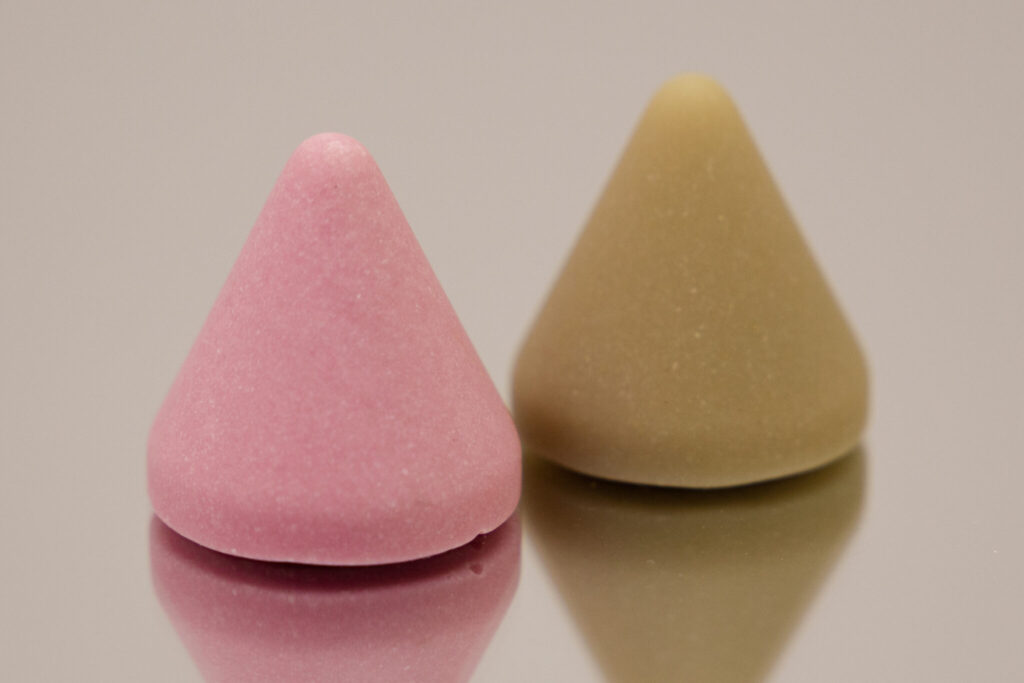
With their low weight, plastic abrasive media are the first choice for sensitive components made of non-ferrous metals and plastics. They are characterized by low inherent abrasion, a long service life and high dimensional stability. They are also ideal for use in the circulation process and offer particularly gentle processing.
The sanding power of plastic abrasive media can be distinguished by color. KA abrasive media (green) stand for a particularly low sanding effect, while KD abrasive media (brown) offer a high sanding performance. The coloring is used for quick visual classification and makes it easier to select the desired degree of processing.
Areas of application & sanding performance
Ceramic grinding wheel
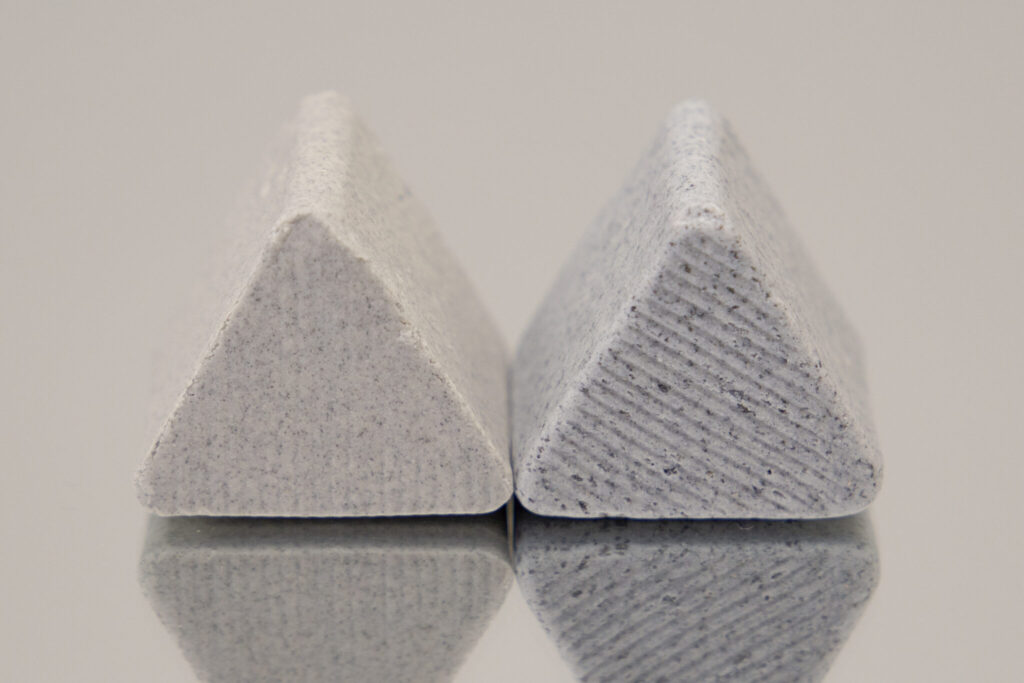
Ceramic grinding wheels impress with their high grinding performance and short processing times – ideal for processing steel and stainless steel parts. They are particularly effective for simple deburring tasks and are ideal for use in the circulation process, where they score points for their robustness and efficiency.
The grinding performance of ceramic grinding wheels can be visually recognized by the surface mottling. The coarser the grain, the more intensive the material removal. A-grinding wheels have the lowest grinding effect and are suitable for gentle processing, while M-grinding wheels offer the highest grinding performance – ideal for intensive deburring or removing stubborn residues.
Shapes & variants
Triangle
Triangle round
Triangle slanted
Cylinder
Cylinder slanted
Tristar
Tristar slanted
Pyramid
Angel
Star
Designations
The names of our abrasive media provide information about their basic substance, grinding performance, dimensions and geometry.
Grinding force | Dimensions | Geometry
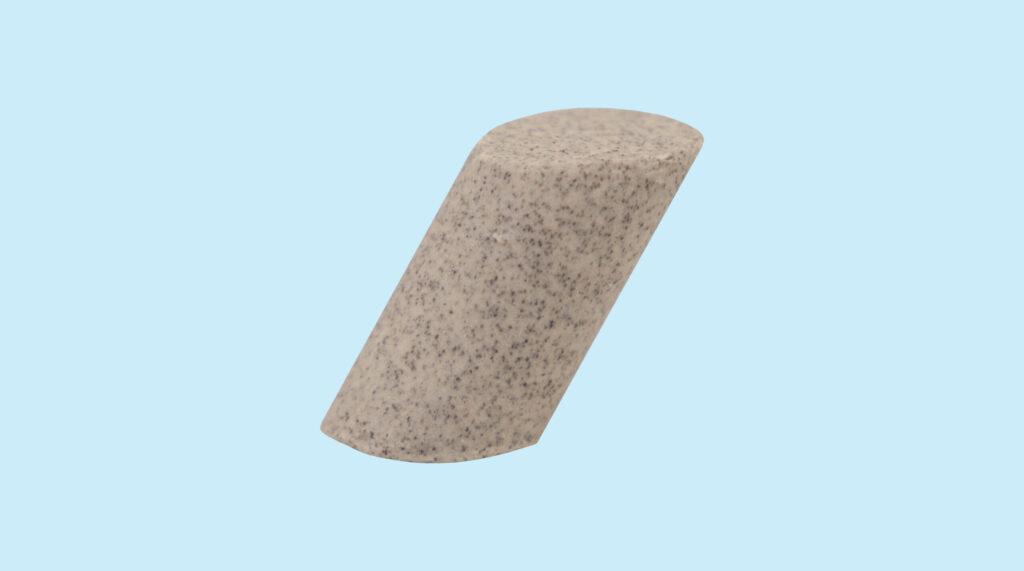
E 12×20 ZS
This is a ceramic, angle-cut cylinder that is 20 mm high and 12 mm deep.
Grinding force | Dimensions | Geometry
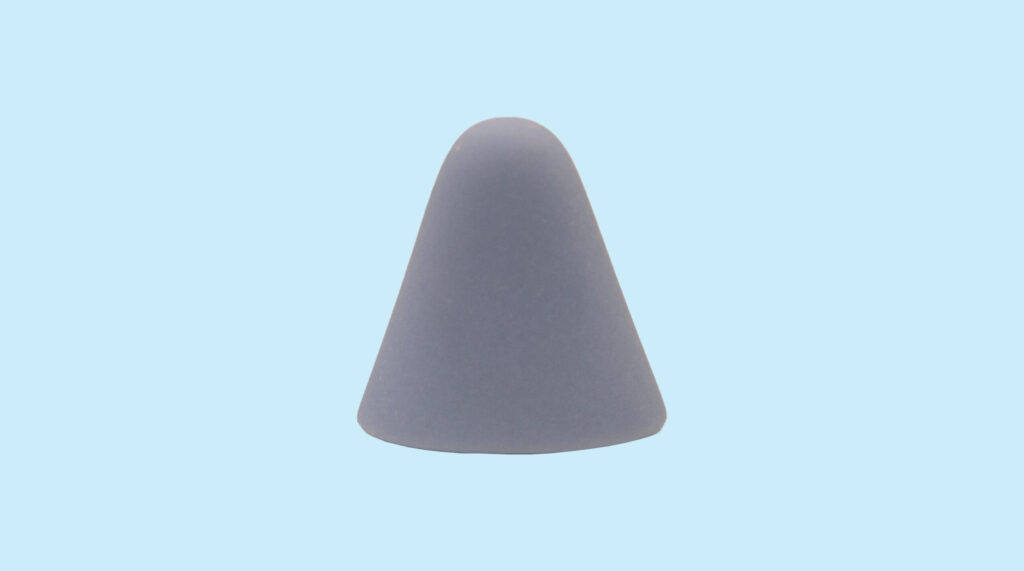
KB 30 PA
This is a blue plastic paraboloid with a height of 30 mm.
Downloads
Your contacts for abrasive media



Frequently asked questions about our abrasive media
How do grinding and polishing compounds differ?
Unlike grinding media, polishing media are non-abrasive, which means they do not contain any abrasive minerals and therefore cannot remove any surface material.
How do I choose the right abrasive?
The selection of the correct abrasive depends on various factors:
- Material of the workpiece
- Processing objective (e.g. deburring vs. polishing)
- Plant type and process duration
We will be happy to help you select the right abrasive and will carry out a free sample processing of your workpieces. Please feel free to contact us.
What materials are used for abrasive bodies?
The most common materials for abrasives are:
- Ceramic – for high grinding performance and long service life
- Plastic – for gentle processing of sensitive components
How do abrasive media differ?
Abrasive media vary in:
- Shape (e.g., triangle, cylinder, pyramid)
- Size (depending on the workpiece and desired result)
- Abrasive performance (depending on material and grit size)
- Base materials (e.g., ceramic or plastic)
What are abrasives used for?
Abrasive media are used for the targeted processing of workpieces in surface finishing processes, e.g. for:
- Deburring
- Edge rounding
- Surface cleaning
- Polishing and smoothing
What are abrasives?
Abrasive media are specially shaped, industrially manufactured bodies that are used in vibratory finishing machines for targeted surface finishing. Depending on the application, they are made of materials such as ceramic or plastic and are available in various shapes and sizes. Their diversity allows them to be precisely adapted to different machining processes and components.