High-frequency systems
The innovative Linear Force Finishing process (LFF) is used in our high-frequency systems. This process was specially developed by us for the post-processing of additively manufactured components and impresses with minimal edge rounding and high surface removal. Due to its efficiency and processing quality, it is also increasingly being used in other sectors, such as medical technology, toolmaking and the food industry. LFF is ideal when filigree structures are to be retained and yet a homogeneous surface is to be achieved.
How high-frequency systems work
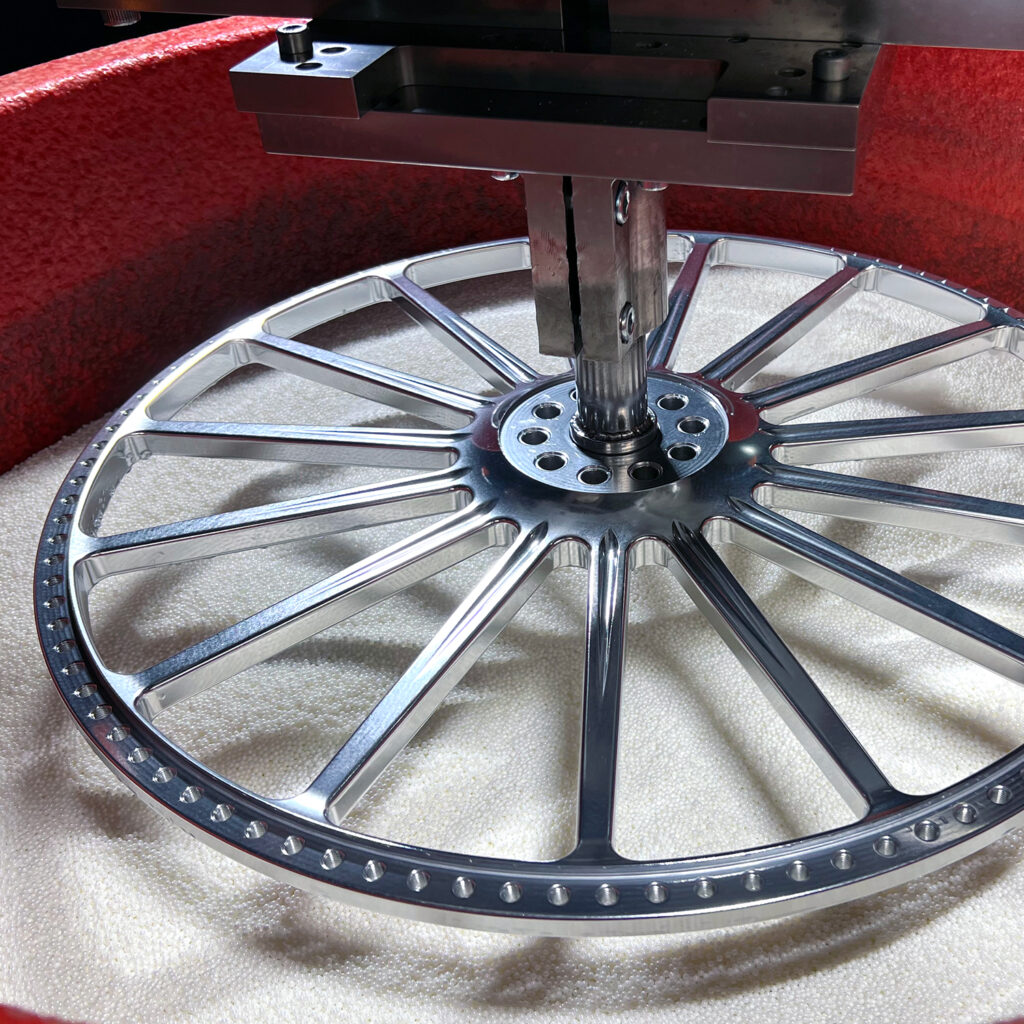
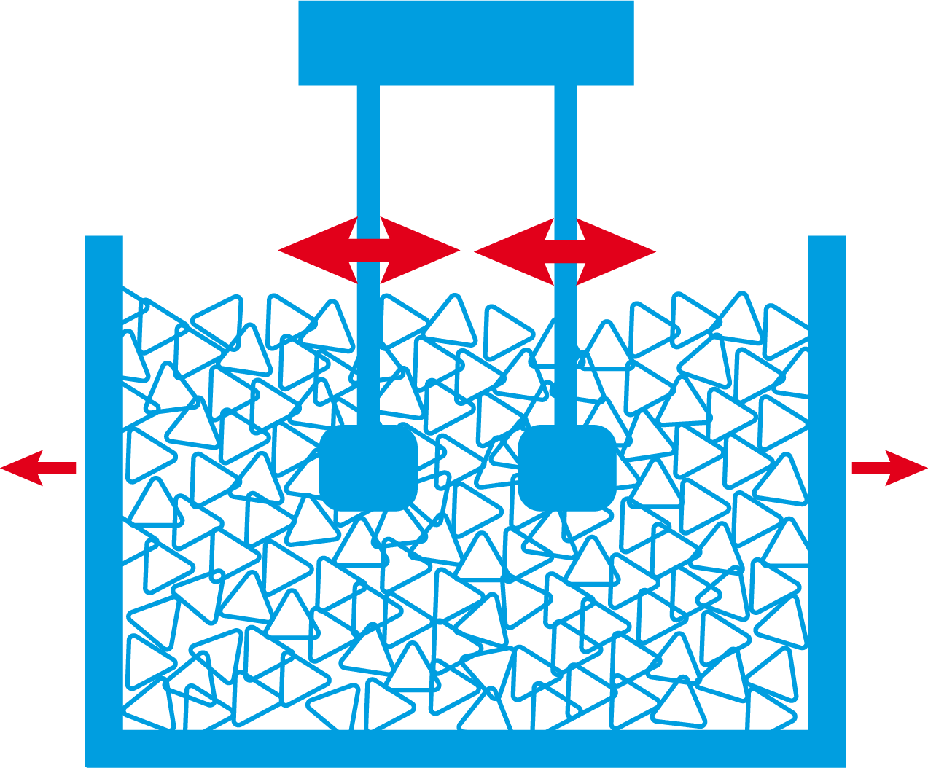
In the LFF process, the movement dynamics differ significantly from classic mass finishing processes. The grinding wheel mass remains almost static and is only moved slightly, while the workpieces themselves – clamped in a high-frequency clamping system – are guided through the mass at high speed. This targeted movement of the workpieces results in intensive and even surface removal with precise control over the component geometry.
Fields of application
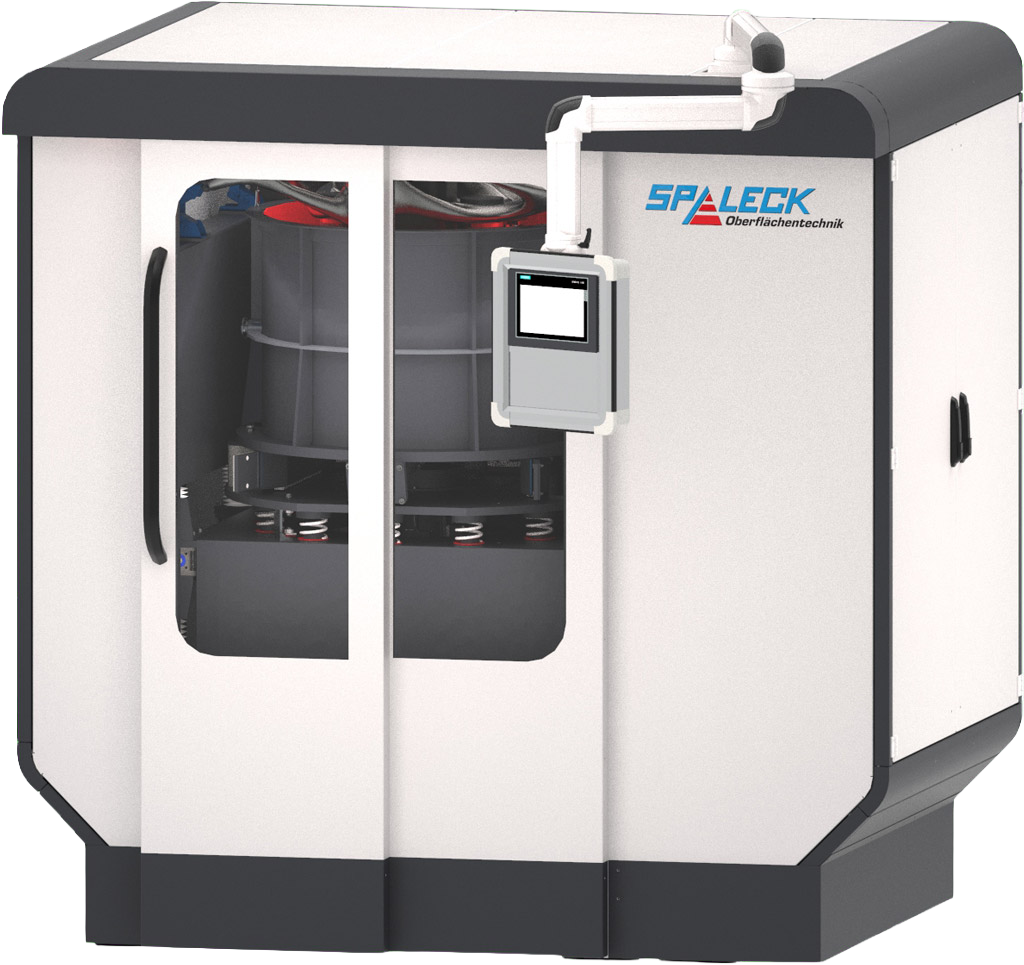
High-frequency system PPL300
The PPL300 is a compact, free-standing high-frequency system with an integrated process water treatment system. Thanks to its four individually controllable clamping systems, up to four components can be processed simultaneously – efficiently, reliably and with reproducible results.
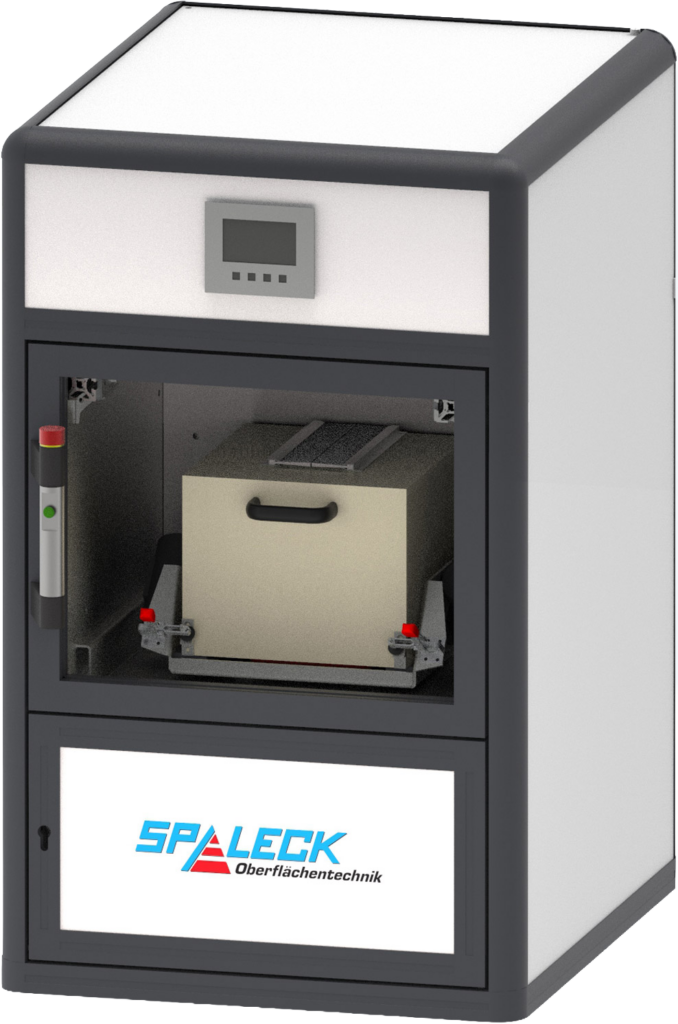
High-frequency system PPL15
Our PPL15 is a compact table system for entry-level Linear Force Finishing. It has a single clamping system and is ideal for finishing individual parts, prototypes or small batches. The system requires little space and can be easily integrated into existing work environments.
Technical highlights at a glance
- Maximum surface removal with minimal edge rounding
- Compact standalone system with integrated process water treatment system
- User-friendly operation thanks to intelligent system control
- Interchangeable processing container for flexible use of process media
- Low-dirt and low-noise process, ideal for different manufacturing environments
Supplementary components
Process media
Drying systems
Process water treatment
Inspection technology
Process automation
Customer support
Your contacts for high-frequency systems


Frequently asked questions about our high-frequency systems
Which materials can be processed with high-frequency systems?
High-frequency systems can be used to process all materials that are also suitable for conventional vibratory finishing processes – from soft metals such as aluminium or zinc to hard materials such as stainless steel or titanium. High-frequency technology offers particularly efficient and gentle processing, regardless of the hardness of the material.
What is the maximum component size or clamping capacity possible?
Up to four components can be processed simultaneously in the PPL300. The maximum total size of the components is 500 x 500 x 500 mm, with a total weight of up to 40 kg. This system is particularly suitable for larger workpieces or series with multiple parts. For smaller applications, the PPL15 is available as a compact tabletop solution. It has a single clamping system and is designed for components with a maximum size of 225 x 225 x 150 mm and a weight of 8 kg.
When is the use of high-frequency systems recommended over other surface finishing processes?
The use of high-frequency systems is particularly recommended when conventional surface finishing processes reach their limits. A decisive advantage lies in the ability to specifically treat areas that are difficult to access, such as cavities and undercuts, which is only possible to a very limited extent with classic surface finishing processes. In addition, high-frequency technology is ideal when intensive surface smoothing is desired without excessively rounding the edges. This is particularly important for components with tight dimensional tolerances or functional edges.
Another advantage is that high-frequency systems can be used to achieve highly polished surfaces that are often impossible to achieve with conventional surface finishing processes. This makes the technology the first choice for applications where the highest surface quality is required, whether for functional or aesthetic reasons.
What advantages does PPL offer in multi-stage processing?
PPL systems offer a decisive advantage, especially in multi-stage machining processes: they enable the flexible use of different work containers, each with adapted process media. This means, for example, that grinding and polishing processes can be carried out efficiently in successive steps – without the need for time-consuming changeovers. This not only saves time, but also ensures reproducible results and consistently high surface quality across all process steps.