
Additive manufacturing
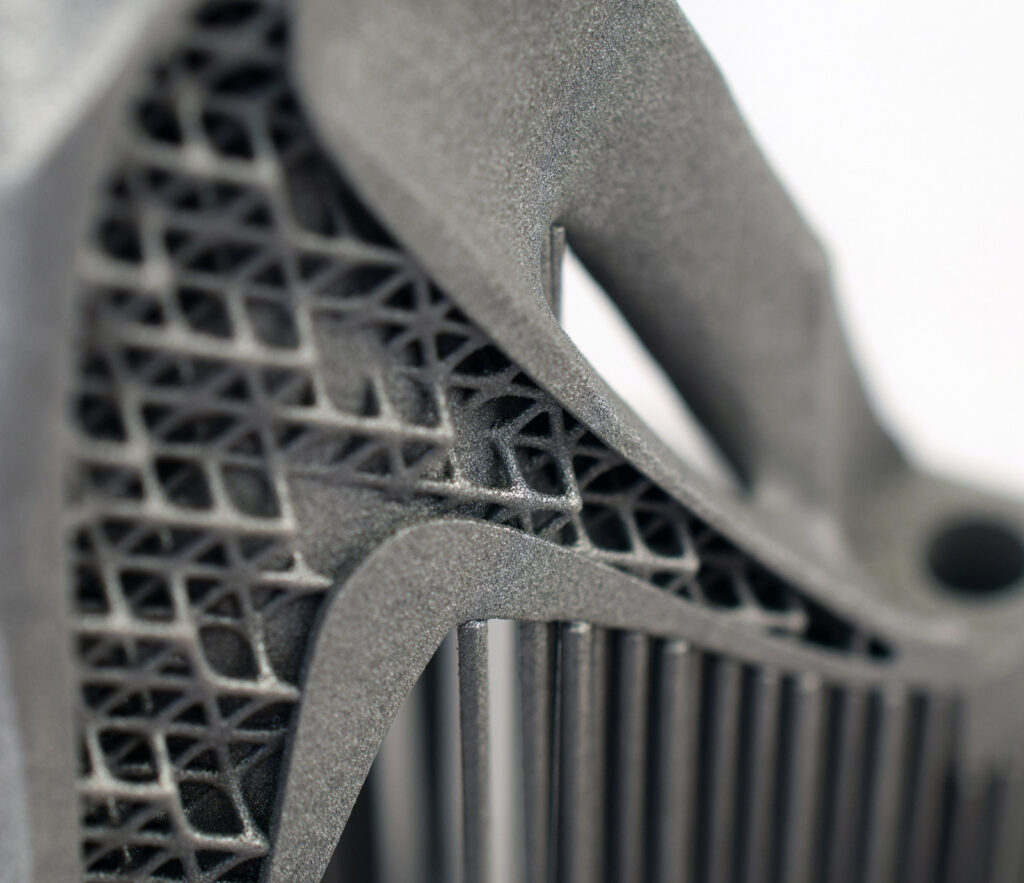
Vibratory finishing is ideally suited for finishing components from 3D printing. The process is stable, efficient and delivers reproducible results. In particular, the LFF process enables a high surface removal rate with minimal edge rounding at the same time – perfect for delicate structures and complex geometries.
Due to the manufacturing process, the components have a rough surface, which is sometimes characterised by a strong step effect. These structures are not only visually disruptive, but can also impair functionality. Our solutions for post-processing additively manufactured components range from tried-and-tested mass finishing systems to specially developed AM post-processing systems. Which process is used depends on the surface requirements – whether smoothing, polishing or achieving defined roughness values.
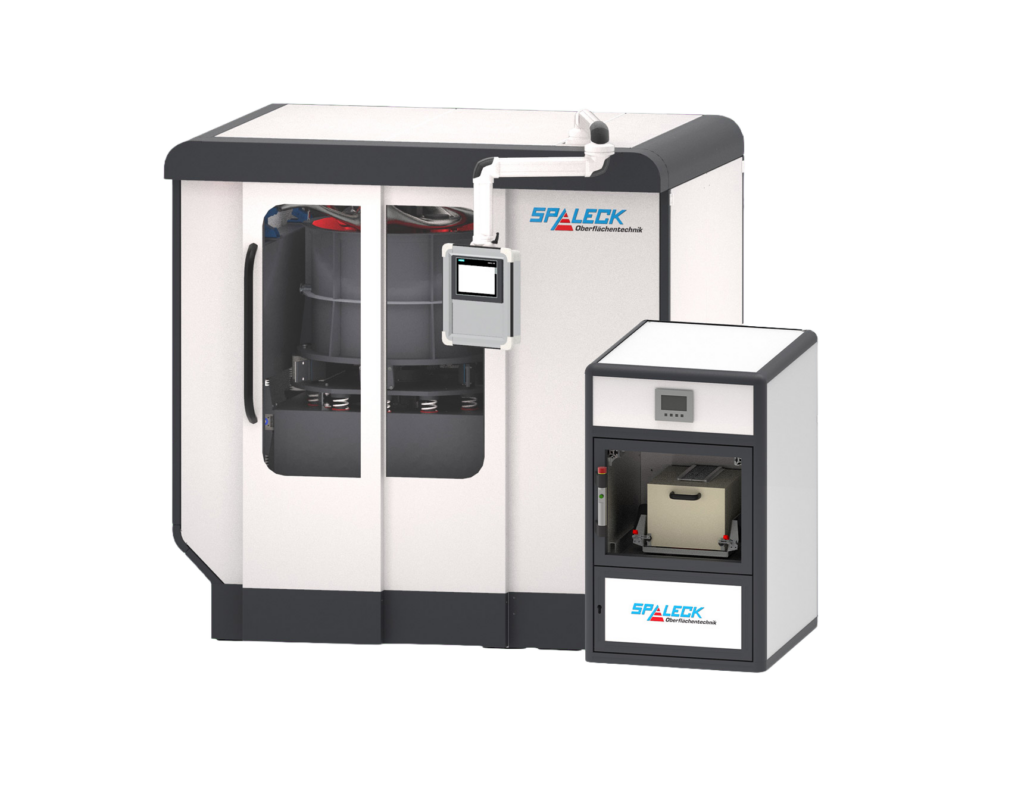
AM POST PROCESSING PPL
For very high surface quality requirements – small to medium quantities and a limited variance of parts.
AM POST PROCESSING PPT
For average surface quality requirements – larger quantities and a large variance of parts.
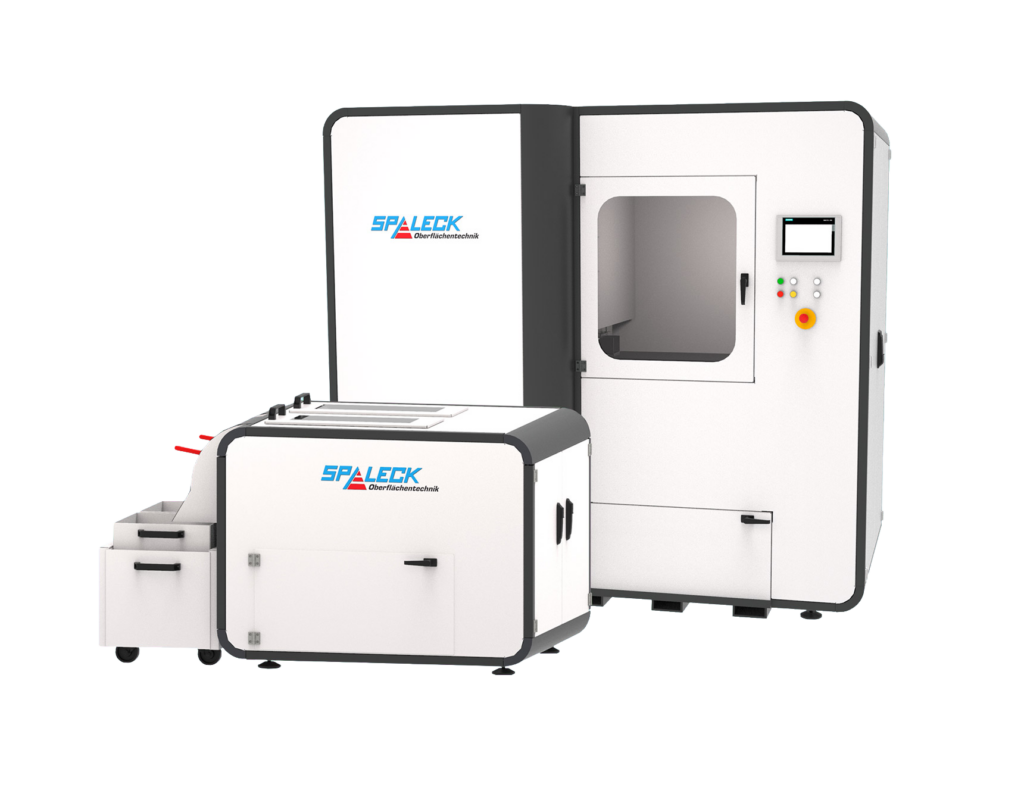
LINEAR FORCE FINISHING (LFF)
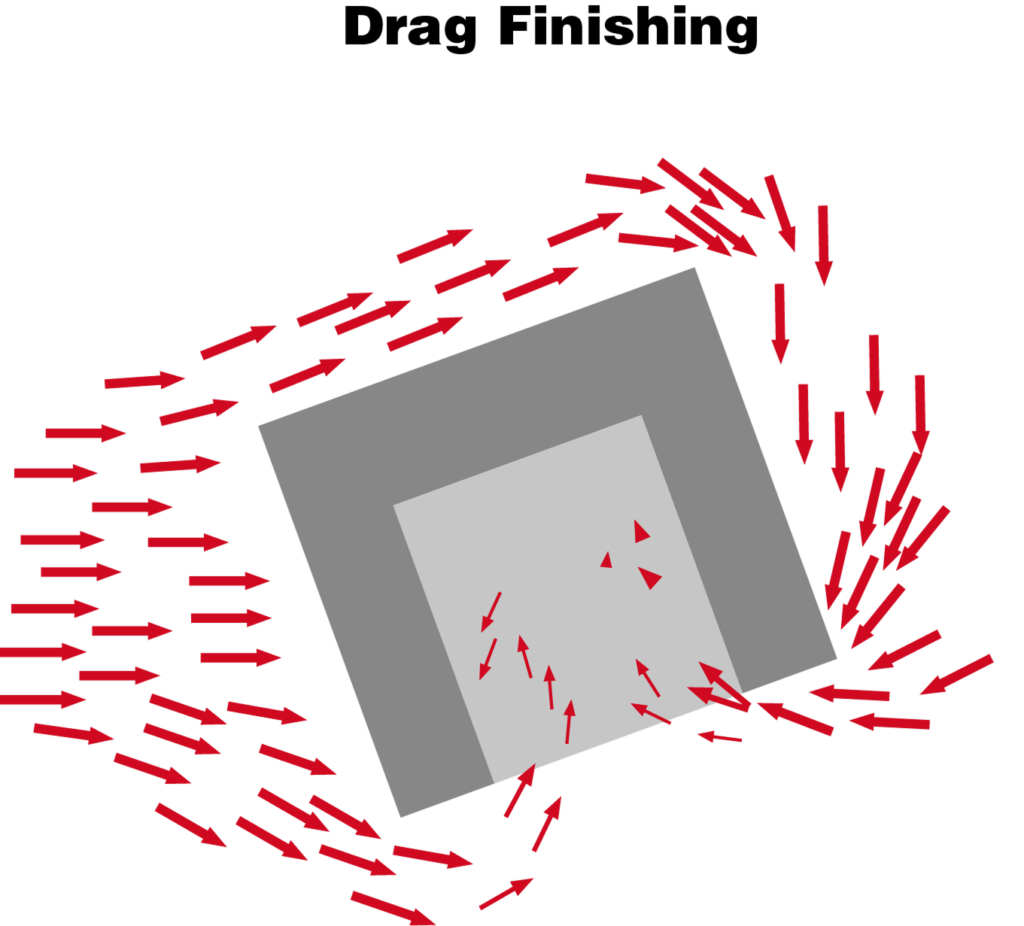
The LFF process sets new standards in surface processing. The targeted process control makes LFF ideal for machining additively manufactured or geometrically complex components. It ensures targeted, intensive material removal while minimising edge rounding – ideal for components with precise contours. In contrast to conventional mass finishing processes, which primarily work on edges, LFF enables surface processing with significantly shorter processing times – up to 15 times faster than conventional processes. The technology is particularly useful where smooth surfaces, high dimensional accuracy and short cycle times are required.
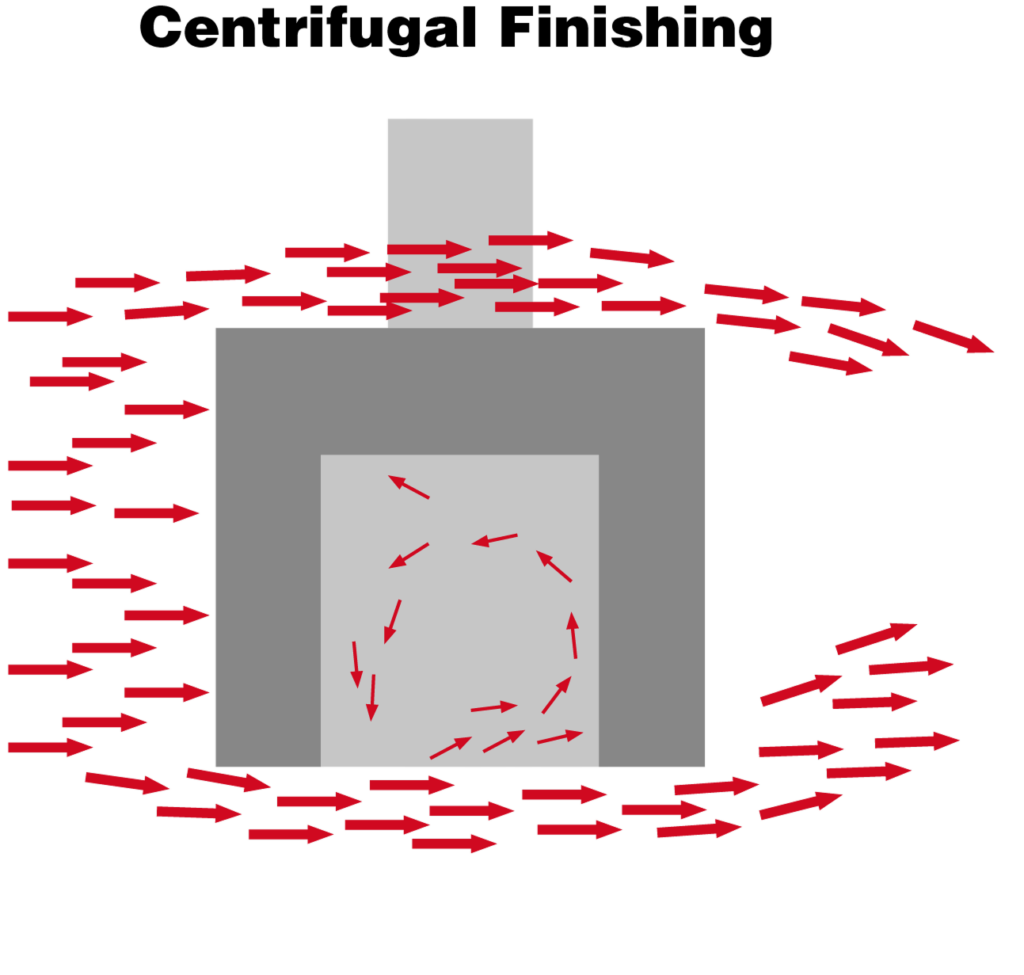
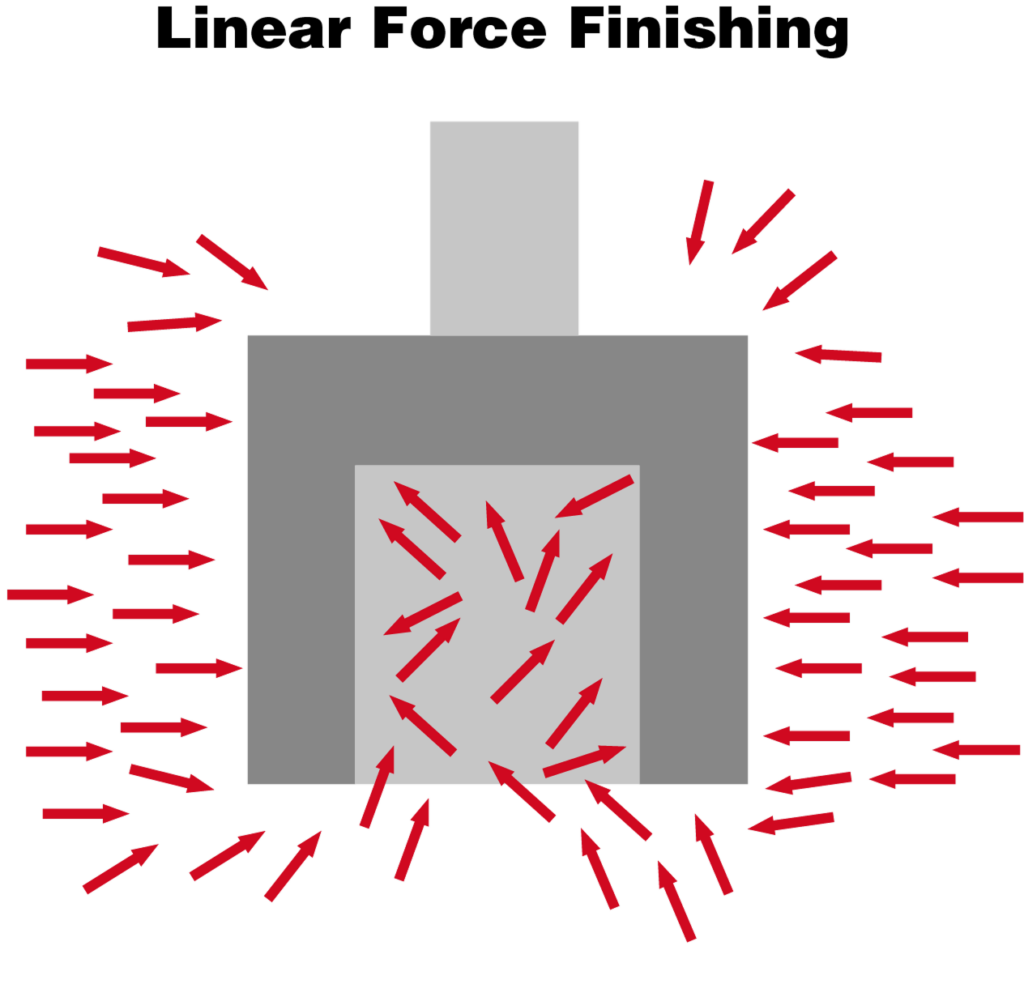
Requirements for the finishing of AM components
Additively manufactured components require precise and process-stable post-processing. Effective surface smoothing and high-quality polishing are crucial, without rounding off sensitive contours too much. At the same time, automated processes must reduce manual reworking and ensure reproducible quality for series production.
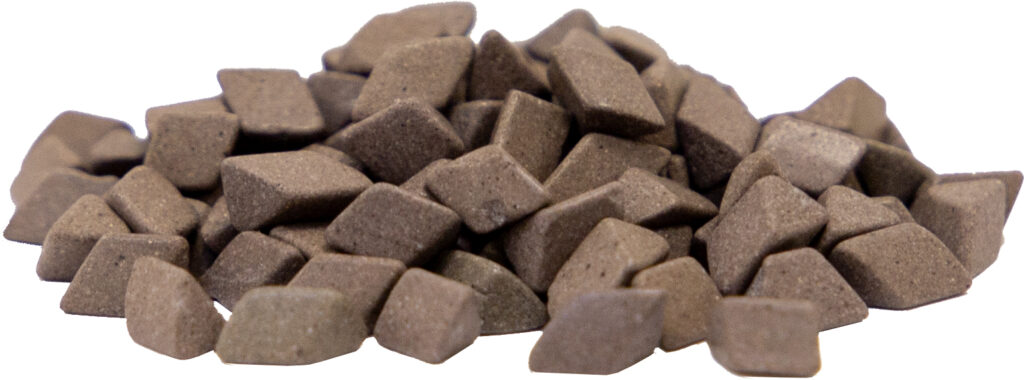
Typical abrasives for additive manufacturing
Plastic media M 4×4 DS
- Particularly high removal rate
- Long service life compared to other highly abrasive media
- Can be used for processing plastics and metals
Sidefact:
Our LLF process achieves a high machining pressure even with small abrasive media. These are advantageous as they are better able to reach complex geometries.
Downloads
Your contact in sales

FAQ
Can hollow or internal structures of additively manufactured components also be reworked?
Internal structures such as passages, undercuts, or complex geometries present a particular challenge in the post-processing of additively manufactured components. Classic vibratory finishing processes quickly reach their limits here, as they can only effectively process external and freely accessible surfaces.
With the LFF process (Linear Force Finishing) newly developed by us, even hard-to-reach areas can be specifically post-processed. In particular, passages and undercuts can be significantly improved with this process. Nevertheless, it is still true that very complex, internal structures – such as fine cooling channels – remain a major technical challenge for the LFF process as well.
Why was the LFF process developed?
The LFF (Linear Force Finishing) process was developed to overcome the limitations of conventional vibratory finishing processes, particularly when machining complex geometries. Conventional processes often reach their technical limits when it comes to undercuts, passages, or areas that are difficult to access. In addition, intensive surface smoothing often leads to undesirable, pronounced rounding of component edges.
The LFF process offers decisive advantages: it enables targeted processing of difficult areas without excessively rounding the edges. At the same time, it is significantly more efficient – compared to processing in a rotary vibrator, the LFF process can be up to 15 times faster. This allows high-quality surfaces to be achieved in less time.
What surface roughness values (Ra) can be achieved with the LFF process or classic surface finishing?
Both classic surface finishing processes and the innovative LFF (Linear Force Finishing) process can be used to achieve very fine surfaces – up to a mirror finish with roughness values of 0.05 µm.
The most suitable method depends on various factors: the shape and geometry of the component, the number of items, dimensional tolerances and the initial condition of the surface all play a decisive role. While classic surface finishing is very effective for many standard applications, the LFF process offers significant advantages, particularly for complex geometries and high surface quality requirements.