












Rotary systems

The simplest type of surface finishing

The processing of surfaces by rotation is one of the oldest and simplest processes in mass finishing. The simple operation and robust technology make rotary systems an economical choice – especially for small to medium quantities.

Rotary systems

Work bowl & functionality

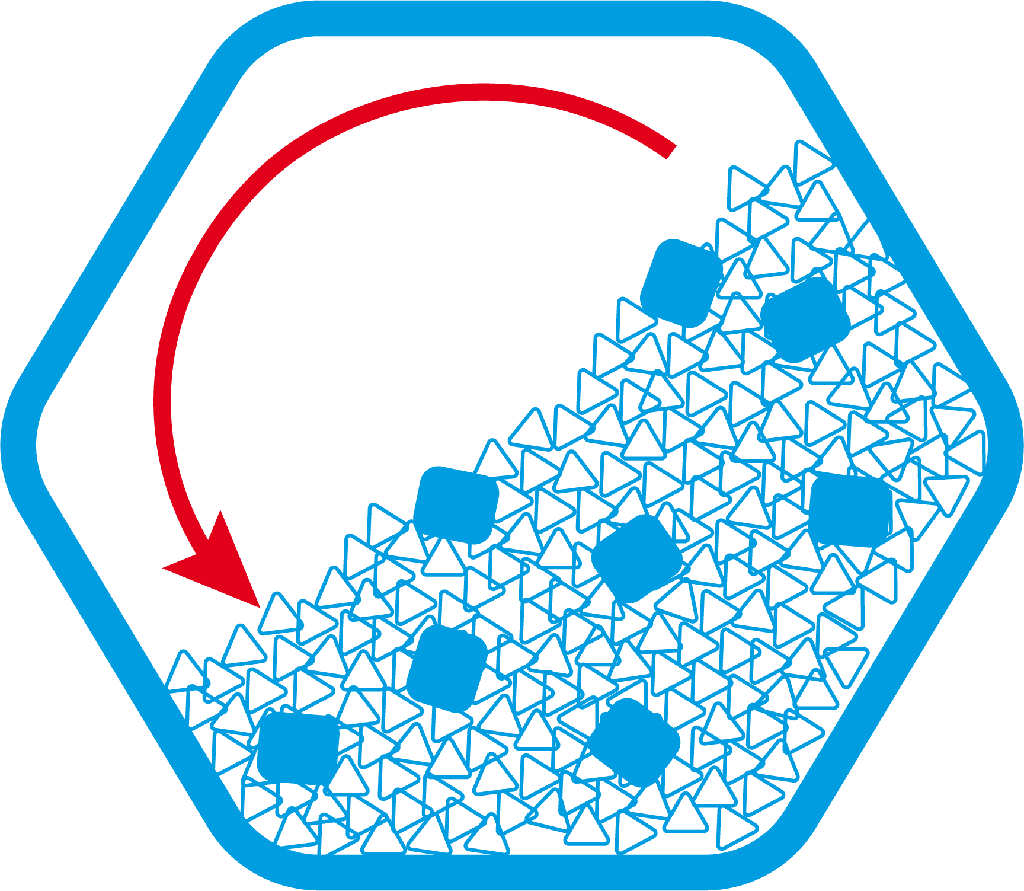
In barrel finishing, workpieces are placed in a rotating container together with abrasive media and compound. The material is removed by the resulting relative movement between the workpiece and the abrasive media. The process is versatile and particularly suitable for homogeneous machining.

Graphic illustrating the principle of rotary systems with abrasive media from Spaleck Oberflächentechnik
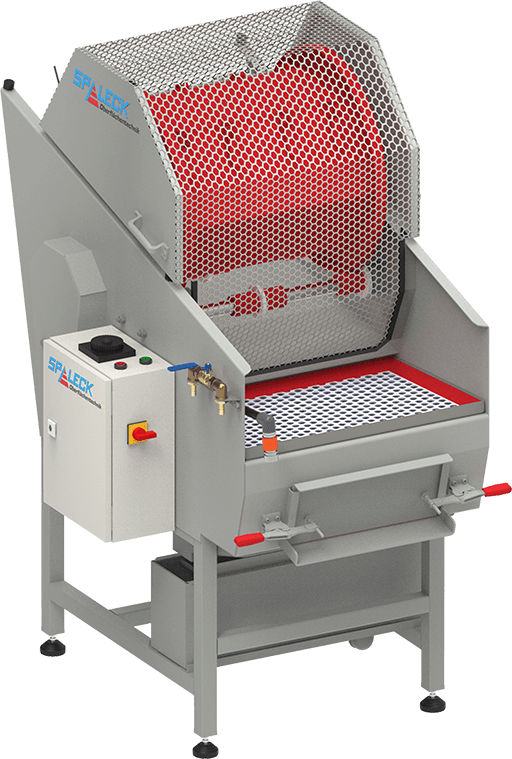
3D model of the RTS drum polisher from the rotary systems manufactured by Spaleck Oberflächentechnik

Barrel finisher RTS

Our RTS system combines the basic principles of mass finishing with modern technology. The integrated separating device has a collection container for grinding media that can be conveniently emptied at the front. Two drums can be operated in parallel – ideal for processing different workpieces in the same work cycle.

Surface grinding bells SC/PC

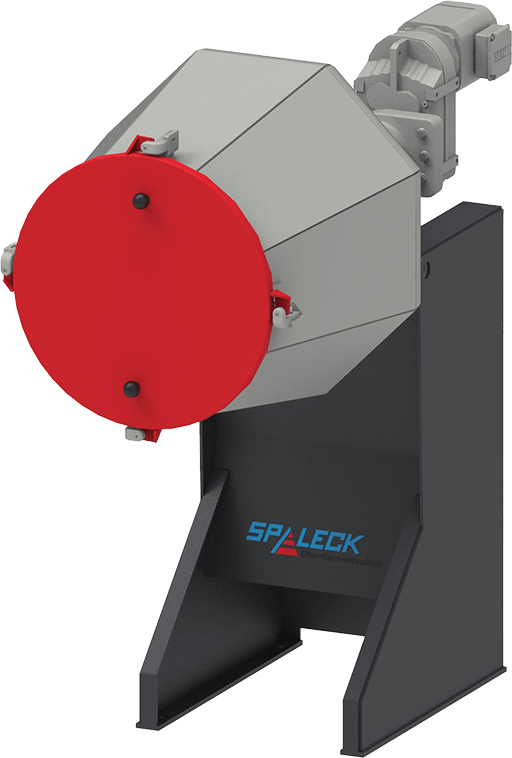
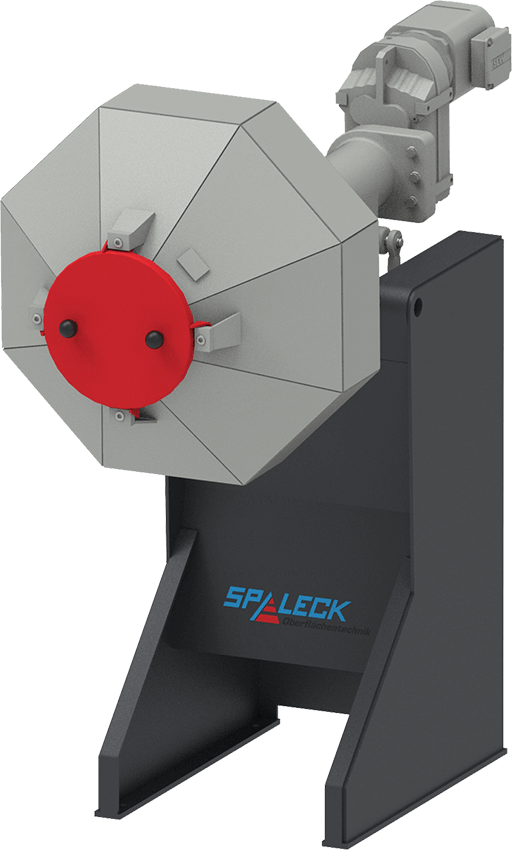
The SC and PC mass finishing bells differ mainly in the shape of their work bowls, which are available in several sizes. Both variants have a closed lid. They can optionally be fitted with a rinsing or sieve cover – ideal for multi-stage machining processes or sensitive workpieces.

3D model of the SC vibratory finishing bell from Spaleck Oberflächentechnik's rotary systems
3D model of a vibratory finishing bell from the rotary systems of Spaleck Oberflächentechnik PC
Rotary systems

Supplementary components

Process media

Icon Verfahrensmittel Spaleck Oberflächentechnik blau
Optimum surface results can only be achieved by combining the system with the right process media – we offer you a broad portfolio of abrasive media, compounds and additives.

Drying systems

Icon Trocknung Spaleck Oberflächentechnik blau
In most cases, it makes sense to dry the workpieces immediately after processing to prevent stains from forming – we equip your system with the appropriate drying technology.

Process water treatment

Icon Prozesswasserrecycling Spaleck Oberflächentechnik blau
You can significantly reduce your water and compound consumption with the optimum combination of advanced system technology and individually tailored process engineering – we will be happy to advise you.

Inspection technology

Icon Inspektion Spaleck Oberflächentechnik blau
The human factor is often a potential source of error in the optical inspection of workpiece surfaces – we automate your inspection process and ensure the quality of your workpieces with our intelligent camera technology.

Process automation

Icon Prozessautomatisierung Spaleck Oberflächentechnik blau
The automated networking of production processes means that work steps can be reproduced extremely precisely – we plan, design and build individual solutions for the automated infeed and outfeed of your workpieces.

Customer support

Icon Gleitschleiftechnik Service Spaleck Oberflächentechnik blau
Technical expertise is required for the development of process technology, system training or regular maintenance – we are at your side in all situations with our in-depth knowledge.
Do you have any questions?

Your contacts for rotary systems

Mitarbeiter und Ansprechpartner im Vertrieb Thomas Tekolf bei Spaleck Oberflächentechnik

Thomas Tekolf

Sales Coordinator
Vice director
Mitarbeiter und Ansprechpartner im Vertrieb David Huls bei Spaleck Oberflächentechnik

David Huls

Sales
Die casting and AM
Mitarbeiter und Ansprechpartner im Vertrieb Janlucas Weiding bei Spaleck Oberflächentechnik

Janlucas Weidig

Sales
Precision stamped parts
Mitarbeiter und Ansprechpartner im Vertrieb Thomas Hogenkamp bei Spaleck Oberflächentechnik

Thomas Hogenkamp

Sales strategy
Vice director
Mitarbeiter und Ansprechpartner im Vertrieb Ingo Loeken bei Spaleck Oberflächentechnik

Ingo Löken

Sales
Mint industry
Mitarbeiter und Ansprechpartner Marko Hoeland im Vertrieb bei Spaleck Oberflächentechnik

Marko Höland

Sales
Field Sales
FAQ

Frequently asked questions about our rotary systems

Rotary drums and vibratory finishing bells are characterised by gentle processing, making them ideal for processing sensitive components. However, the processing is time-consuming.

Roundtub vibrators operate at approximately twice the speed of rotary systems and offer a good balance between processing quality and process speed. Centrifugal systems are the fastest in comparison – they achieve up to 20 times higher processing speeds than vibratory systems. They are particularly suitable for high volumes and short cycle times.

Roller drums are particularly suitable for users who work with small batches and want to rely on a cost-effective process. Due to the low investment costs, they represent an economical solution for small production quantities. Another advantage is that when several small drums are used, different batches can be processed in parallel. This makes roller drums ideal for flexible manufacturing processes in which different materials or processing stages are to be handled simultaneously.

Our RTS roller drum consists of a base frame that can be equipped with drums of different sizes. Depending on the size of the drums, it is also possible to process two batches in different drums at the same time. Drums with a volume of 9 and 15 litres can be used in parallel. With a drum volume of 35 or 50 litres, only one drum can be used.

The SC and PC surface finishing bells differ mainly in the shape of their working containers and thus in their possible applications.

SC bell jar – ideal for large workpieces
The conical shape of the SC’s working chamber provides a generous opening that makes emptying easier. This design is particularly suitable for larger workpieces and ensures an efficient workflow.

PC bell – ideal for smaller workpieces
The double conical shape of the PC bell enables particularly good circulation and mixing of the workpieces. This makes it ideal for smaller parts and uniform processing.

Three different cover variants are available for the SC and PC surface finishing bells, each of which fulfils different functions:

Closed lid (standard)
Made of painted steel, the lid protects the bulk material and serves as effective splash protection during wet processing.

Rinsing cover (optional)
The rinsing cover is made of perforated stainless steel and is equipped with a rotatable hose connection. It enables targeted rinsing, ensures clean processing results and facilitates the separation of workpieces and abrasives – especially in multi-stage processes.

Screen cover (optional)
The screen cover – made of perforated stainless steel sheet or pressed mesh – also serves to separate workpieces and abrasive media. It is mainly used for dry processing, e.g. with walnut shells, and supports efficient workflows.