
Surface finishing technology
What is surface finishing?
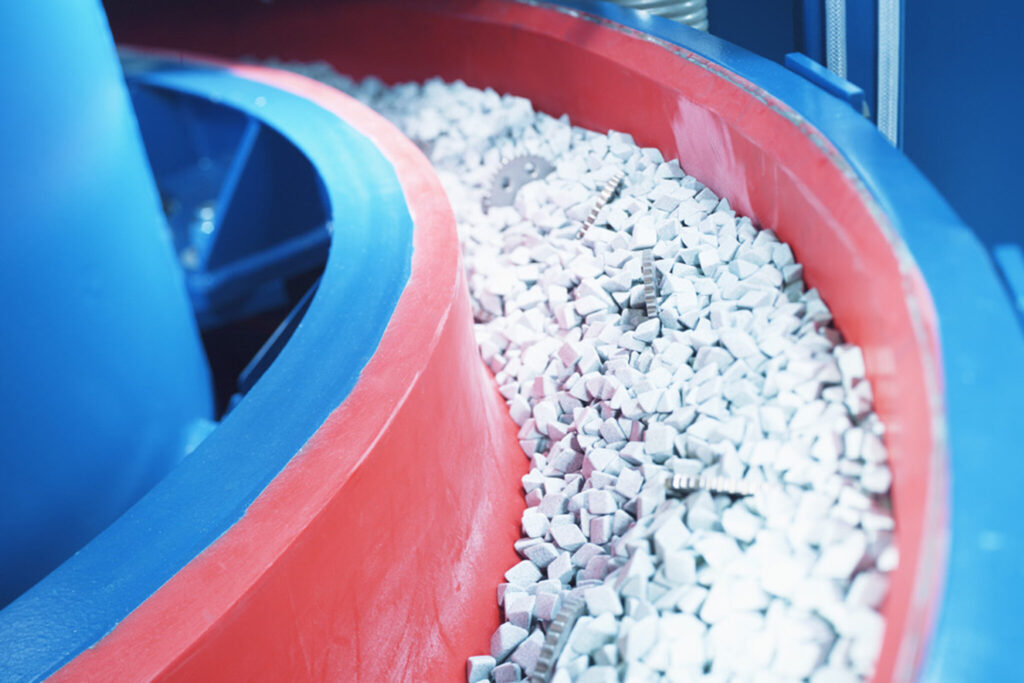
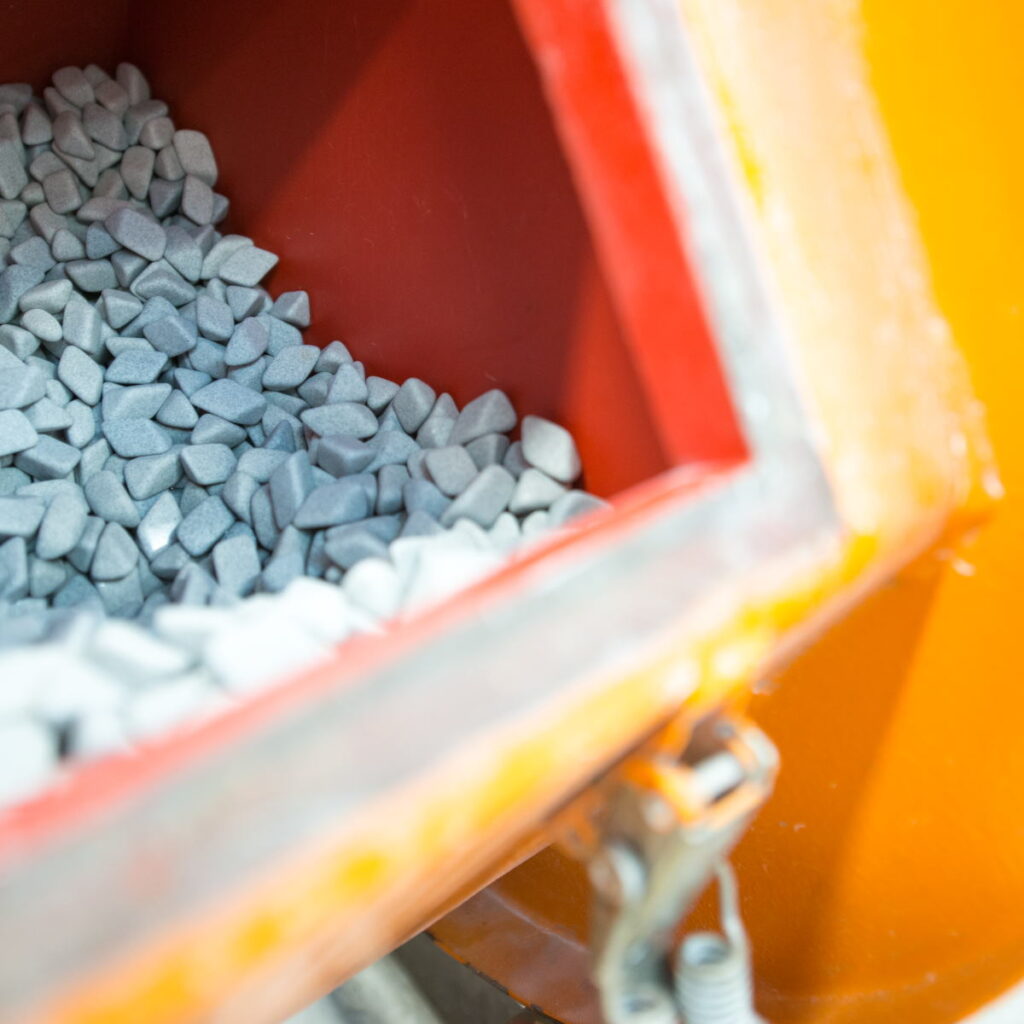
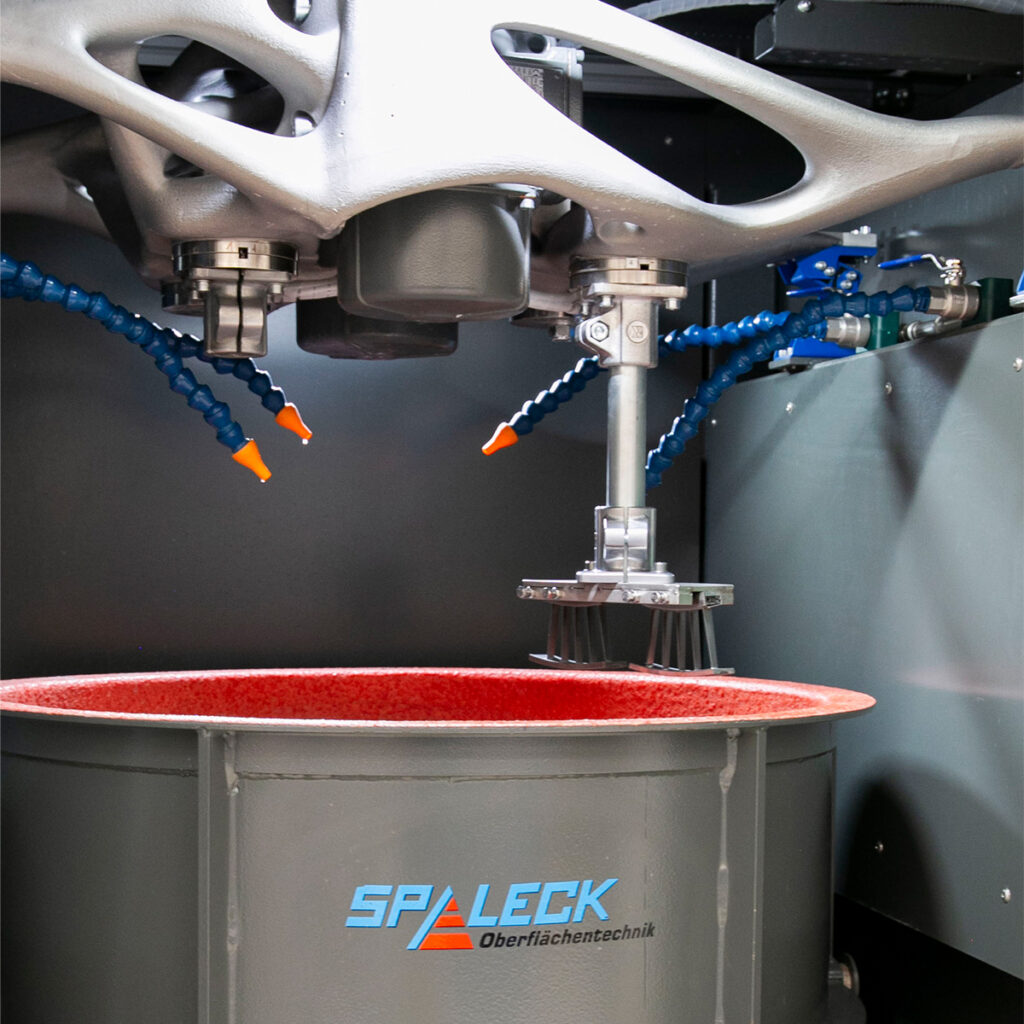
Vibratory finishing is a process inspired by nature for processing various materials such as metals, plastics, and ceramics. Special finishing systems are used for this purpose. In these systems, the workpieces are placed together with abrasive media, water, and compounds into a container that is set in motion by rotation, vibration, or centrifugal force. This relative movement leads to abrasion, which smoothes the surface of the workpieces. The resulting abrasive material is absorbed into the process water, which must be treated after the finishing process.

Goal
- Deburring
- Descaling
- Grinding
- Polishing
- Rounding
- Shining
- Cleaning
- Preserving
- Paint stripping
SELECTION
- Processing systems
- Process Media
- Drying systems
- Process water treatment
- Process automation
- Inspection technology
Processing
- Throughfeed systems
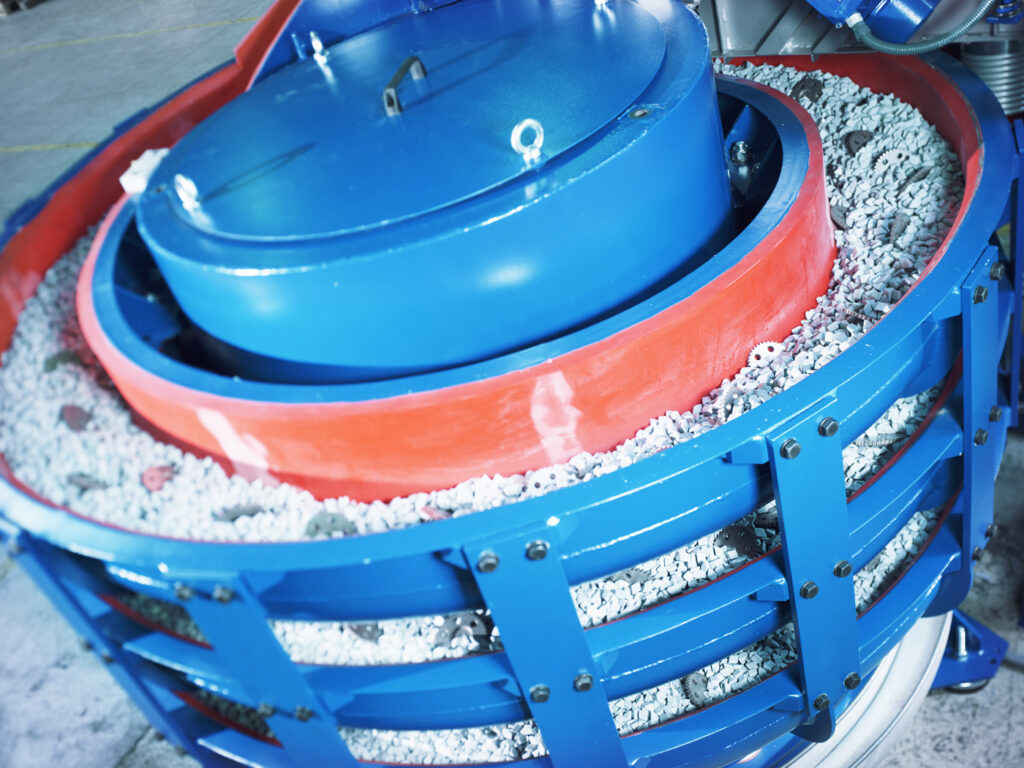
- Centrifugal systems
- High-frequency systems
- Rotary systems
- Vibration systems
- Special systems
Surface finishing systems
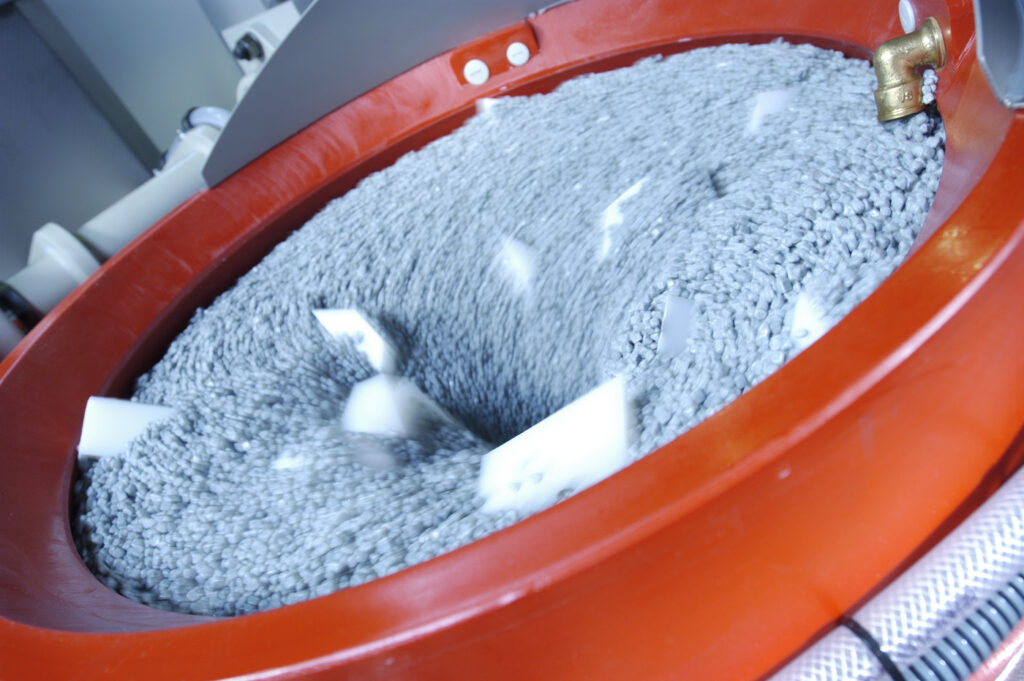
Throughfeed systems
Centrifugal systems
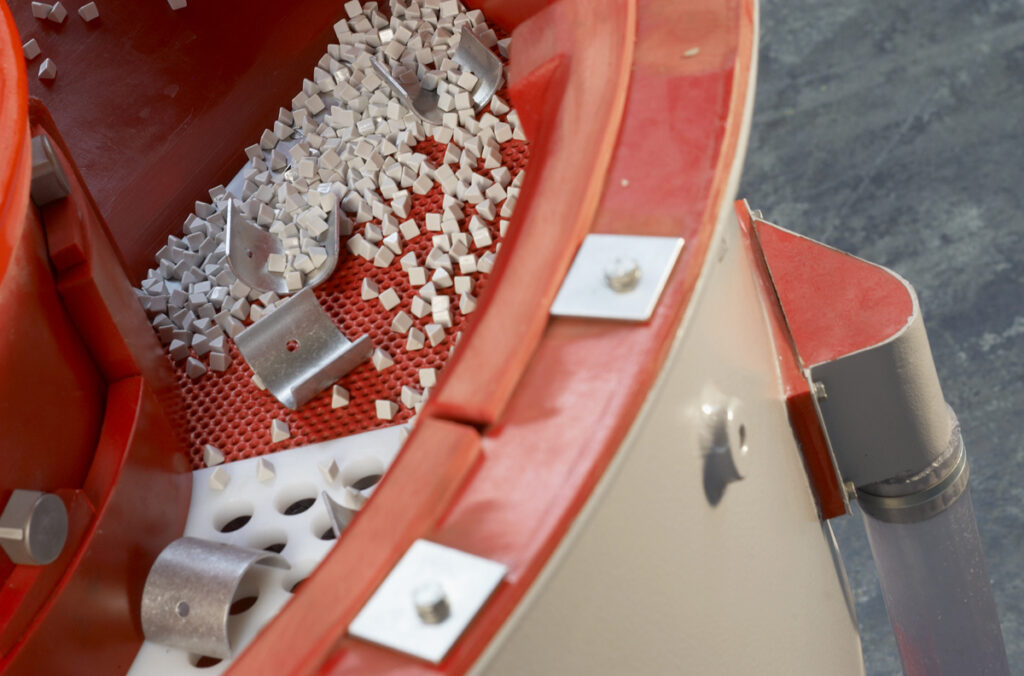
Vibration systems
Rotation systems
High-frequency systems
Supplementary components
Process media

Drying systems

Process water treatment

Inspection technology

Process automation

Customer support

Downloads
Your Sales Contacts






FAQ
What are the most common tasks in surface finishing?
Deburring
Deburring involves removing unwanted residues such as burrs, chips or fraying from workpiece edges and surfaces. These often occur during machining processes such as milling, punching or casting. Removing burrs not only improves the appearance of the workpiece, but is also crucial for its functionality, safety and further processing – for example, during assembly or coating.
Edge rounding
Edge rounding – also known as edge breaking – is an important part of the deburring process. It involves deliberately rounding off sharp edges and corners on workpieces, usually made of metal. Rounded edges not only ensure safe handling, but also improve the adhesion of coatings and reduce the risk of corrosion. In addition, edge rounding enhances the appearance of the workpiece and facilitates further processing.
Polishing
The aim of polishing is to remove unevenness, scratches, grooves and small cracks in order to achieve a smooth and shiny surface. Polishing not only improves the appearance, but also offers functional advantages such as reduced friction, improved cleaning properties and greater resistance to external influences.
Cleaning/descaling
Cleaning or descaling in the surface grinding process serves to remove contaminants such as oils, greases, oxide layers or other dirt from the surface of the workpieces. This step is crucial to ensure a clean and functional surface – whether for direct further processing, coating or immediate use of the parts.
How long does surface finishing take?
The duration of a surface finishing process depends on various factors and cannot be answered in general terms. The decisive factors are the workpiece material, the process media used, the surface finishing machine and the desired surface quality. When comparing processing times, processing in rotary machines takes the longest, followed by processing in vibratory machines. Centrifugal processing is the most efficient and can be up to 10 times faster than processing in vibratory machines.
What liquid is used in surface finishing/trowalising?
The liquid used in surface finishing is called compound. Compounds are highly effective, biodegradable active agent mixtures for optimizing surface finishing processes. They improve abrasive performance, clean, degrease, and protect against corrosion. Available in liquid, solid, or powder form, they can be flexibly combined with additives such as defoamers or biocides, thus ensuring stable processing operations and consistently high quality.
What is the difference between surface finishing and trowalising?
There is no difference between surface finishing and trowalising. These are two different terms for the same type of surface treatment. It is a process inspired by nature that is suitable for treating surfaces made of metals, plastics and ceramics, for example.
What happens during surface finishing?
Surface finishing is a mechanical process for surface treatment. Workpieces are placed in a container together with abrasives, water and compound and set in motion by vibration, centrifugal force or rotation. The abrasives and workpieces slide past each other, causing abrasion on the workpieces and smoothing their surface.